 heala
healaStart with 15 Minutes: Walking First Steps for Weight Loss
Start with 15 Minutes: Walking First Steps for Weight Loss
The simplest effective plan combines a modest daily calorie deficit, progressive walking towards roughly 10,000 steps, and two weekly strength sessions. Start today with one action goal: a 15-minute walk after lunch. Build from there and you should see a safe, steady loss of about 0.5 to 1 kg (1 to 2 lb) a week.
TL;DR:
- Averaging around 10,000 steps daily, with a significant portion at moderate-to-vigorous intensity, supports long-term weight loss when combined with diet adjustments.
- Small, consistent diet swaps such as replacing sugary drinks with water and increasing vegetable intake are more effective than radical overhauls for creating a sustainable calorie deficit.
- Strength training twice weekly helps preserve muscle mass and boost metabolism during weight loss, using simple exercises like bodyweight circuits or dumbbell routines.
- Tracking weekly averages of steps, weight, and sleep provides more accurate progress insights than daily fluctuations or obsessing over the scale.
- Building from a manageable baseline, setting one clear action goal per week, and adjusting targets based on data help maintain motivation and steady progress over time.
Table of Contents
- The steps for weight loss you can start this week
- How many steps do you need to lose weight?
- What diet changes actually create a deficit?
- Why strength training belongs in your weight loss plan
- Tracking your progress without obsessing over the scale
- How Heala centralises the numbers behind these steps
- Why consistency beats perfection
- Follow the plan without the manual tracking
- Sources
- FAQ
The steps for weight loss you can start this week
Big outcome goals (“lose two stone”) rarely survive a bad Tuesday. Action goals do, because they tell you exactly what to do, not just what to hope for. The CDC’s five-step framework backs this up: understand your motivation, track where you actually stand, set realistic targets, find support, and monitor progress. Here’s how that looks in practice.
- Write down your why and one small action goal. Something concrete, like “walk 15 minutes after lunch” beats “be healthier.”
- Get a baseline. Weigh yourself, check your current average daily steps, and jot down what you eat for three normal days.
- Set targets. A progressive step goal, a calorie-deficit figure, and a pace you can sustain for months, not weeks.
- Schedule your movement. Daily walks plus two short strength sessions, blocked into your calendar like any other appointment.
- Make three or four simple diet swaps. Smaller changes that add up, covered in detail below.
- Protect your sleep and stress levels. Both quietly sabotage even well-designed plans.
- Adjust as you go. Recalculate targets every few weeks based on what the data actually shows.
Pro Tip: Pick ONE action goal per week, not five. Adding a second habit before the first feels automatic is the single most common reason people abandon a plan by week three.
How many steps do you need to lose weight?
Steps matter, but not all steps are equal. A behavioural intervention published in PMC found that people who lost a significant amount of their body weight at 18 months averaged around 10,000 steps a day, with many of those steps coming from moderate-to-vigorous activity in bouts of at least 10 minutes.
That distinction matters for how you plan your day:
- Casual steps (walking to the kettle, pottering round the office) count, but they’re not doing the metabolic heavy lifting.
- Continuous, brisk bouts of 10 minutes or more raise your heart rate enough to meaningfully shift the deficit.
- A brisk 30-minute walk can deliver most of your daily MVPA target in one go.
10,000 and 3,500. Long-term losers in the trial above averaged close to 10,000 total steps daily, with a substantial portion of those at moderate-to-vigorous intensity, according to the same PMC intervention data.
If 10,000 feels miles away right now, don’t sprint towards it. Practical guidance from BBC Good Food suggests gradually adding several hundred steps a week from your current baseline, which keeps injury risk low and adherence high. Pace matters more than the raw total once you’re doing regular brisk walking.
What diet changes actually create a deficit?
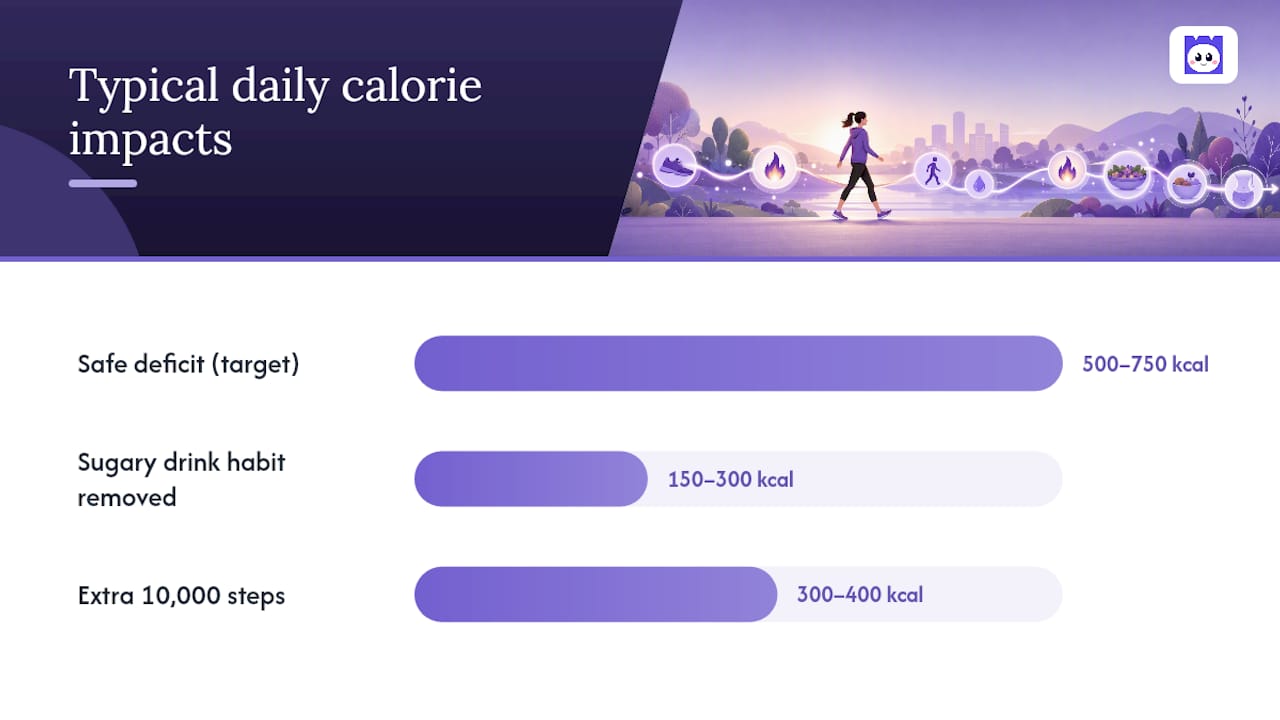
Walking builds the base, but food does most of the deficit work. Harvard Health puts the safe range at about 500 to 750 kcal a day below your maintenance needs, which aligns with losing about 1 to 2 lb (0.5 to 1 kg) a week. Go much lower than that and you tend to lose muscle alongside fat, along with your energy and your patience.
Small, repeatable swaps beat dramatic overhauls:
- Swap sugary drinks for water or black coffee. This alone can remove 150 to 300 kcal a day for a regular soft drink habit.
- Fill half your plate with vegetables before adding anything else.
- Add a palm-sized portion of protein to each meal. It keeps you fuller for longer than the same calories from refined carbohydrate.
- Try a 25% portion reduction on your usual plate rather than switching foods entirely.
Exercise alone almost never closes the whole gap. Walking an extra 10,000 steps burns roughly 300 to 400 kcal for most adults, which is useful but nowhere near enough on its own against a 500 kcal target. Diet and movement need to work together, and NHS guidance frames both as equally necessary. A sustainable diet built around foods you actually enjoy holds up far better over months than a restrictive one you’re counting down the days to escape.
If you’re managing a medical condition, taking regular medication, or considering anything close to a very low-calorie diet, speak to a doctor or registered dietitian before you start. That’s not a formality. Rapid weight loss carries real risks, including gallstones, muscle loss, and nutrient shortfalls, and it’s a different conversation entirely from steady, food-and-walking-based change.
Why strength training belongs in your weight loss plan

Official guidance from NIDDK recommends regular moderate aerobic activity per week plus muscle-strengthening work on several days. Skip the strength part during a calorie deficit and you risk losing muscle along with fat, which drags your metabolic rate down with it. Strength training is genuinely a two-for-one: it burns calories in the session and protects the lean tissue that keeps your metabolism working for you.
Two templates that need no gym membership:
- 20-minute bodyweight circuit: squats, push-ups, glute bridges, and a plank, three rounds, minimal rest.
- 30-minute dumbbell session: rows, presses, lunges, and deadlifts if you have the equipment, two or three sets each.
Our guide to what the first eight weeks of strength training actually build covers this in more depth if you’re starting from nothing.
Tracking your progress without obsessing over the scale
Weigh yourself weekly rather than daily, since weight naturally fluctuates due to factors like water, sodium, and hormones, and daily weighing mostly measures noise, not fat loss. Track your average daily steps weekly too, along with sleep hours and a rough note of what you ate, rather than obsessive calorie logging.
Common pitfalls worth naming directly:
- Under-reporting food intake without realising it, which is extremely common and not a character flaw.
- Treating exercise as something that “earns” extra food, which quietly cancels out the deficit you just built.
- Letting poor sleep slide, when short sleep raises hunger hormones and cuts willpower almost immediately.
Pro Tip: If your weekly average hasn’t moved for several weeks despite sticking to the plan, recalculate your calorie target rather than cutting further. Your maintenance needs drop as you lose weight, so the deficit that worked at the start eventually needs adjusting.
How Heala centralises the numbers behind these steps
Kerem covers health and fitness data for Heala. A health and fitness app can pull in wearable data from devices like Fitbit and WHOOP, log meals from photos, and track sleep and recovery in one place. That matters here because a stalled step count or a missed strength session often traces back to poor sleep or low recovery, and seeing all three side by side makes the cause obvious rather than guesswork.
Why consistency beats perfection
The maths of a small deficit compounds quietly over months. Favour a plan you can repeat over one that looks impressive for a fortnight, and let the data, not guilt, guide your next adjustment.
— Kerem
Follow the plan without the manual tracking
There are other ways to track this: a notebook, a spreadsheet, a basic pedometer. They work, but they demand you remember to update them, and most people stop within a few weeks. Some apps are built to remove that friction by pulling steps, sleep, and recovery data automatically from wearables like Fitbit and WHOOP, so the numbers behind your plan update themselves.

Inside the app, weight tracking with a trend line smooths out the daily noise from water and sodium swings, showing you the direction that actually matters over weeks. Photo meal logging cuts down the friction of food notes, and sleep tracking without a separate watch flags the nights that are quietly working against your walking and strength goals. If you’re ready to see your steps, meals, and recovery in one view instead of three separate apps, start a free trial on Heala and set up your first weekly check-in.
This article is general information, not a substitute for advice from a qualified doctor. Consult a qualified healthcare professional about your own circumstances before acting on anything here.
Sources
- Calorie deficit explained: Is it a safe, sustainable approach to weight loss? - Harvard Health
- Association between steps/day and weight loss in a behavioural intervention - PMC
- Steps for Losing Weight - CDC
- Physical activity and weight management - NIDDK
- Lose weight - NHS
FAQ
How many steps should you take a day to lose 1kg a week?
Around 10,000 steps a day, with roughly 3,500 of those at moderate-to-vigorous intensity, is associated with successful long-term weight loss in behavioural intervention research, but the deficit still needs support from diet.
What are the best steps to take to lose weight?
Start with a baseline check, set one action goal like a daily walk, build towards progressive step and calorie targets, add two weekly strength sessions, and track weekly rather than daily, following the CDC’s five-step framework.
Can you lose 5kg in two weeks safely?
No. A safe rate is about 0.5 to 1 kg a week according to Harvard Health, so 5 kg in two weeks would mean a severe deficit that risks muscle loss, nutrient shortfalls, and rebound weight gain.
Does walking 10,000 steps a day help you lose weight?
Yes, particularly when a good portion of those steps come from brisk, continuous walking rather than incidental movement, though it works best combined with a modest calorie deficit rather than relying on steps alone.
How can Heala help me follow a walking-first weight loss plan?
Heala pulls step counts from wearables like Fitbit and WHOOP automatically, tracks weight on a smoothed trend line, and logs sleep and recovery, giving you one view of the factors this plan depends on.
Recommended
Heala opens 1 October 2026
Free forever — Pro is optional.
Photo food logging, adaptive training, a morning recovery score and a 3D body twin, in one app.